Uncategorized

Peace in My Heart

It’s been hard to write publicly these past few days. The world outside of this Ayurveda retreat seems crazy. I rarely open my computer or check the news, and yet I can’t escape it. My heart aches for this planet, and I am confused that such a despicable person is in charge of my beloved home country. If I get started writing about it, I won’t stop, so today I’m going to focus on something peaceful.

First, for those of you who don’t really know where I am, let’s get our bearings: I am in Coonoor, India, 6,500 feet up in the Nilgiri Mountains, in a tiny village called Hulical. We are surrounded by tea plantations as far as the eyes can see, wild gaurs roam freely, the forests are full of porcupines, deer, boars, panthers, and black bears (which we never see), and dozens of species of birds which we are delighted to listen to and watch from our little perch on the patio. Each day is like being on a mountaintop safari, and it is easy to just sit and watch the day go by along with the animals, the clouds, the rising and setting of the sun…

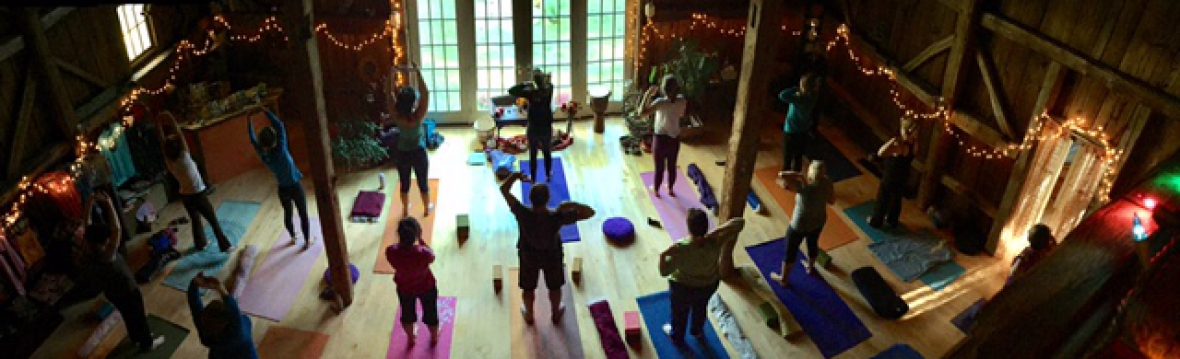
We wake up, go to yoga class, eat breakfast in the cool of the morning, visit with the Dr., take walks through the villages and the winding paths of the tea, enjoy our first of two Ayurvedic treatments before noon, and eat every morsel of an amazing lunch each day. Afternoons unfold with a second treatment, maybe a nap or another walk, a cooking class, meditation… And as if any of us could be hungry again, there is dinner, followed by either an evening program or time to retire early to read, write, or chat with loved ones at home.

Some days we get to go to the market, and although it’s always a bit chaotic down there, there is something about it that brings me peace. I love to watch the people move about. Women in their saris, children holding hands with their mamas, grown men locked arm in arm as they stroll, sparrows stealing rice from big burlap bags, Abdul snipping long strands of flowers for altars, Nagaraj and his wife Vasanthi selling sundries in their tiny shop, the same tailor tucked in on the back side of the market, sewing on an old cast iron Singer that looks like something my grandmother would have used.

In this thicket of vegetable stalls, life goes on, despite the crazy world outside this mountain city. Every face offers a curious smile and a “namaste.” I visit my handful of friends who own little booths full of bindis or fruit or flowers, and I flow along with the traffic, taking pictures, smiling at shopkeepers, posing for a selfie, sticking my nose into a pile of jasmine.

And the veggies… Oh my goodness, the abundance, the variety, the colors! People here are truly plant-based eaters, and there is so much to pick from: pumpkins, colrabi, cauliflower, zucchini, eggplant, beets, carrots, onions, beans, cabbage, radishes, peppers… and it goes on and on! People shop almost daily here. Few have refrigerators, the word “leftovers” is not even a word, and folks just cook fresh food daily. Imagine that?

Check out this display. I love the squash sliced perfectly in half and surrounded by brussel sprouts, turnips, summer squashes, okra, and the prettiest little striped eggplants!

This lovely man has had his corner stall since I’ve been coming here, and I have asked him so many times to take his photo, that this year when he sees me, he smiles, says hello, and immediately poses so I can add to my decade-old collection of shots. You might wonder why I need to take someone’s portrait over and over, but every time there is something different and magical about a person’s eyes, the way they engage with you (or not), even the way they keep their shop is different. The photo on the left is from a few days ago; the one on the right is from 2020. I promise myself to write down his name the next time so that next year I can address him properly.

On my way out of the market I know I have to pass once more by the fish monger, and it is a powerful smell. I take a final sniff of petals at Abdul’s flower stall, and hold my breath as I round the bend, up the stairs, and out into the sunlight. The streets are full of people, and it’s time to head for the hills.

I leave feeling happy, my eyes full of color and smiles, my heart full of the knowledge that there are so many sweet people out there just living their lives one day at a time. I’m grateful for the faces, for the beauty of the vegetables, for the expansive green of the countryside I drive up into as I leave the bustle of the city behind me. I’m grateful for peace in my heart.

with love,

Katie

Uncategorized

Ganesh, the Moon, & a Mango!

The 10-day celebration of Ganesh is nearly complete, ending on the full moon September 7th. If you read my last post, you will recall the story of Ganesh, the elephant God born from Parvathi’s desire to have a devoted protector If you haven’t checked it out, you might want to peek at that one first: LINK HERE. I shared the story of Ganesha’s birth, death, and return to life, all in the course of a single day!

Today’s post is a sweet share that tips a hat to another love of mine–Ayurveda–and the five constitutional elements, or pancha mahabhutas, that make up all of life: earth, water, fire, air, and ether. Ganesh is well known as the stable, grounded, somewhat stubborn, loveable protector, associated with the element Earth. Thus, Ganesh rules the muladhara chakra, the root, the energy center of the body typically associated with earth and the qualities he embodies as a being. Ganesh is often seen with red flowers in his hands or adorning his forehead, red being the color of the root chakra and the red earth of India.

While balanced earth element brings physical and emotional stability and groundedness, too much earth can get you stuck. Likewise, too little earth and excess air, and we are floating away untethered. Let’s dig in a little deeper.

When the root chakra is out of balance, there is either too much or too little earth at play. Too much earth can show up as lethargy, depression, and resentment, being attached to things, ideas, people, food, etc. If there is too little earth, someone might lack grounding, experience anxiety or scattered thinking, and feel unstable in their body or mind, feel uncomfortably cold or experience dryness. When the root chakra is balanced, however, we feel calm, supported by and connected to our tribe, physically stable, and mentally put together (thank you earth+water=stability!).

The stories of Ganesh show us that our dear elephant god has the capacity to be overly attached to his sweets (too much earth element), while in other tales, Earth is his superpower, keeping him calm, slow, grounded, and content to just be. Let’s have a wee story or two, shall we?

Photo I took of the Ganesha Altar at Blue Mountain’s home in Maul.

Did you ever wonder how Ganesh ended up with a broken tusk? It’s one of my all-time favorite stories of the gods, and I think you’ll see why. It all begins with a grand feast held for Ganesha on his birthday. Picture sweets galore, so many you couldn’t possibly taste them all.. but one particular dessert is Ganesha’s fancy, and he loves it so much that his mother has made sure there is a mountain of them: modakas! These little rice dumplings brimming with coconut and jaggery are his very favorite, and so Ganesha can’t help himself. He eats and eats so many of the coconut treats that his belly balloons to capacity! After his birthday feast is over, Ganesh climbs precariously up onto his VERY undersized chariot driven by Mooshika, his devoted little mouse, who steers the diminutive cart down the moonlit road under Ganesha’s weight. Mooshika tries desperately to keep the rattling cart on the road, but it’s all over when the mouse sees a snake slither in front of them, and when he veers to the side, Ganesh tumbles out of the topsy turvy cart in a heap. His giant belly pops, exploding all of his sweets like a canon! In his distress, Ganesh bumbles around in the moonlight, desperately picking up all the modakas, and stuffs them back into his belly! In a flash of insight, he grabs the snake and quickly ties it around his belly to hold all the sweets inside! Can you imagine the scene?

Chandra, the full moon, who has been watching the whole fiasco unfold, is so amused and begins to chuckle and then to laugh out loud. Poor Ganesh, frustrated and embarrassed, cracks off one of his tusks, hurls it up at the laughing moon, and POP! Out goes the moonlight, and all the world is dark!

Little Ganesh on Mooshika, from Bhaktapur, Nepal

We can see how overindulgence, attachment to food (or anything), frustration and resentment (no one likes to be made fun of) can lead to a disastrous situation. Don’t worry, dear reader, I promise to continue this story in my 3rd and final post on Ganesh, but for now, let’s get back to the elements and another Ganesh tale that demonstrates the best of how Earth shows up in our dear Ganesh!

Because he is so rooted (and perhaps a little bit lazy), Ganesh often chooses the path of least resistance (and for Ganesh, least exertion is key); but his sweet temperament, paired with his deep wisdom makes up for his preference for moving a bit slower–or shall we say, more mindfully?

One day, Ganesh and his brother Kartikeya, the valiant God of War, are hanging with their parents Lord Shiva and the goddess Mata Parvathi, when they are challenged to a special task! Now, before I tell the story, know that Ganesh and Kartikeya are about as different as two brothers can be: Ganesh is portly and jolly, the epitome of gentleness, while Kartikeya is muscular and athletic–a total action man. They are equally smart and capable, just in very different ways, and although they adore each other, they are very competitive, especially when it means receiving the affection of their parents!

The story goes that Parvathi and Shiva have been given a sacred mango, which they don’t want to split in half (ahem, doesn’t sound like great parenting, but this isn’t my story). So instead they ask their sons to compete for the golden fruit. Ganesh, being the foodie that he is, sits at the feet of his parents ready to win the mango! Karthikeya mounts his beautiful peacock, ready to fly into action! The task: to circle the entire world three times. Whoever can do it fastest wins the sacred mango! Karti zips off on his peacock in a flash, the perfect demonstration of speed, skill, and athletic prowess. An observer would certainly think Kartikeya has left our gentle, grounded Ganesh in the dust! But at the end of it all, who gets the mango? Ganesh, who barely moves a muscle. How is this possible, you ask? In his wisdom, while his brother loops around the globe at warp speed, Ganesha slowly circles his parents three times, claiming that they are his whole world. Of course he completes the thrice circumnavigation first and wins their affection along with the succulent sacred mango! Smartypants Ganesh doesn’t have to break a sweat… he just takes his sweet time, leads with his heart, turns on his charm, and lets the mango come to him. HA! Kartikeya is quite angry, and feeling duped, turns on his heel in frustration. Legends say he became a monk for awhile, but that’s another story!

Our Dragonfly Yoga Barn Ganehsa Altar ❤️ Notice the peacock feather for brother Kartikeya 🦚

Clearly, we need a balance of all the elements in our being: Earth to keep us stable, calm, and grounded, water to bring buoyancy and hold earth together to create form, fire to transform matter, thought, and experiences, air to bring energy and enliven the subtle being, and ether / space to hold it all. Are you more like Kartikeya or Ganesh? There’s no wrong answer, just an awareness of what elements show up in our body, mind, heart, and spirit.

Sigh… I adore this elephant god with is coconut candy-filled belly and his flash of anger at the moon… his quick insight, charming humor, and conservation of energy in winning a delicious prize, despite his brother’s vast athletic talent. I also feel for Kartikeya who tries so hard to do what he has been asked, only to feel undermined by his quick-witted brother. Keeping the gods human so we can recognize ourselves is the brilliant fun of Hindu mythology. I have learned so much about myself over the years studying the gods and goddesses, their (our) pitfalls and triumphs, our human personalities intertwined with their divinity. It’s really like looking in the mirror. We are all sacred beings, part of the one divine cosmos, even if we each have our own distinctive character. I appreciate the reflection. I hope you’ll join me for the follow up story in my next post on Ganesh and the full moon!

With love and many blessings,

Katie

💜

Uncategorized

Sweet Mountain Temple

Last year I wrote a little about Hullical and Pannaven, the lovely little villages perched just behind our retreat here on the mountainside. Between the two, there are at least 5 temples, and each is dedicated to a particular deity. Last year while I was here, Pannaven’s new Ganesh temple was being built overlooking a gorgeous valley. The site was chosen because a herd of nine or so elephants had made its way into the town a couple years back and bedded down here where the forest meets the village. The same group of elephants came through again last year just before our arrival, and at the new temple they had just finished putting up the plaster deity of Ganesh on the roof with a whole consort of gods and goddesses. (Apparently the elephants agree with the choice dedication)! This year we came back to a freshly painted temple and were invited in to see the sanctuary and altar. Ganesh sits prominently on the top deck, just above another covered carving of some of his family including his parents Shiva and Parvathi, and one of his siblings, Kartikeya, the god of war. And yes, the sky is THAT blue!

In order to enter we must take off our shoes and wash our feet.

Outside the temple is a group of nine sacred entities called a Navagraha, representative of the nine planets. They are worshipped by Hindus to overcome any hindrance, obstacle or bad luck. Faithful believers pray to the Navagrahas before they pray to any other deity or the temple’s namesake, so they are located in the area outside the sanctuary. You can see in my pictures, each Navagraha is draped in a colored cloth representative of its planet, their foreheads smudged with a tilak made of sandalwood paste and turmeric. It is customary to circumnambulate this collection of idols nine times (one for each). If the Navagraha is not present outside the temple, then worshippers will take three clockwise loops around the entire temple. This action is either called a Parikrama (meaning “path surrounding something”), or it’s called a Pradakshina (meaning to go around in a clockwise direction).

Even though we are not dressed in appropriate attire (we’ve been walking through the tea and are in our hiking gear), we are invited by a local caretaker to go in, so we wrap our shawls around our bare shoulders, and enter.

Inside the temple is the main altar of Ganesh with fresh flowers, incense, and multiple oil lamps burning. Just outside the altar and looking in at Ganesh is this other stone carved animal, also adorned with flower garlands, a banana, and a champa flower (smells like Heaven!)

We spend a few minutes here and then head to the steps back to the path where our shoes are waiting for us.

The town of Pannaven stretches out from the edge of the forest and surrounding tea fields down a little walkway that leads to a diminutive village of about 20 terraced houses, each with some variation of tile roofs, pastel washed in blues, greens, and one pink with red trim. Beside it is a crumbling home with roof tiles in disarray which looks deserted. It’s hard to say how old some of these cottages are; some of the tea plantations date back 1835 here, but the local tribes existed here long before the English colonized these areas and set up their tea operations. The original huts of the hill tribes were made of red clay with teak beams and thatched roofs, and as far as I know, none of these remain here.

We pass by numerous outlying cottages, follow the pathway through the tea, visit Lakshmi, the retreat’s cow (who is due any moment now with a new calf), and turn the bend toward Mountaintop.

Thank goodness we get to walk every day–there are so many temples to visit and tea fields to romp through…

Until the next post, much love and many blessings,

Katie

Uncategorized

To Carry Water

Sometimes words can’t do justice to what I experience here. There is so much color. So much texture… so many sounds, there are not enough words in the dictionary for the variety of smells in India. Every day I am amazed at what pours in through my senses. It is a delight (and sometimes not so much ;). I suppose I am as open to, curious about, thrilled by sights, scents, and sounds at home in NH as when I am here in this land, but I don’t generally post about day to day living; it’s just too… ordinary. Here, looking at life and how the people live it reminds me to relish little things more… to notice life a little more. Even the smallest things capture my curiosity.

So today a little post on water. Of course, no matter where you live on the planet, water is a precious resource. Who doesn’t carry some kind of a water bottle these days so we can stay hydrated during the day? But imagine if every bit of water you needed: to wash dishes, for bathing, drinking, brushing your teeth, for laundry–imagine if you had to walk down the lane and fill a jug at a communal spout every time you needed water vs. turn on your sink spout.

Even though I live where water is plentiful, I know the value of clean water. Perhaps traveling here so many years now and being in cities where water is scarce has really taught me the value–the gift–of clean water. Here in the Nilgiris, where we are, the locals are fortunate to have potable water from a few local springs, and there are even small streams that flow down the valleys here. Our water here at the retreat is sourced at a spring just over the hill, and it is said we could drink the water if we want it is so fresh. But it is strictly for washing, so we drink distilled water from flasks, often ported for us to our rooms by members of the wonderful staff here.

If we are out early enough on our morning walks, it is common to see people in the local villages line up to fill their water jugs. They probably think it strange that we ask if we can make photos of them holding their jugs, filling their pails… it is such an common thing–why would we want to capture such a household chore? It would be like a South Indian coming to NH and asking to take a photo of me shoveling snow, I suppose. Just the things we do because we have to do them. And yet I can’t help myself:

When we ask to make a photo, they smile and pose, promptly closing their mouths to hide their teeth. Here I manage to snap quickly enough to catch the glimpse of a smile. And every once in awhile, someone is just happy to be seen:

One morning when Karin and I are out walking up and down the mountainsides, we happen upon this lady carrying a big steel pail up a rocky trail. She sees us and stops to see if we want chai. Ladle in hand, she opens the pail so we can peek. Steam rises from the full pot, and we reluctantly say “no” and point back to the top of the mountain to the clinic. “No tea for us,” we say, and in broken English she tells us she is bringing tea to the workers, and points up the hill, smiles, and then off she goes into a band of sunlight.

With love from India,

Katie

Uncategorized

Tea Time

I am back in India where my room overlooks the Nilgiri Mountains of Tamil Nadu. The past few days have been a nestling back into my perch looking out over the tea. It is a comfort to return, a time of sweet solace, of deep deep physiological, emotional, and spiritual work, and the joy of rest and the expansion that comes when we stop the grind and just allow ourselves to be cared for, body, mind, and soul. It is a gift and a privilege to be here, and I am grateful. The mornings begin with a bulbul bird heralding the coming day. I hear him before my alarm goes off. And it’s worth getting up for the sunrise here.

Since all of our rooms face east, this is how we wake. But the sun sets behind us, and the rooms do not have back windows, so it is easy to miss that equally beautiful moment unless you walk up through the garden to the top of the retreat. My first afternoon here, as the sun dips low, I am pulled to the back gate to a tiny dirt path where the tea cascades down the Western slope of the mountain, where a gigantic olive tree commands the ridge, and where the flowers are so fragrant and full of birds, you would think you were dropped into paradise from out of the sky.

When I return to my room, I begin to sketch out a poem: (still in progress):

Tea Time

It is four o’clock

on the nose.

Sun pours liquid light over mountains, 

splashes silver and gold on emerald hills,

and a million leaves

shimmer in response

like diamonds on the sea

a sea of tea

I need to stand in it, 

this ocean of green leaves and sunlight spilling.

So, I open the gate–

the back way out–

to where it’s just me and the birds

and the breeze

in this hazy tea-time diamond light.

Lantana branches out, pours citrus petals

along the path, and

red dust rises from between my toes.

I walk slowly

take each step as a breath rises and falls

there is no need to rush now

It is easy to stand here

at tea time

on a mountain top

as the sun sinks low

and the red whiskered bulbuls sing in the lantana

and the golden-silver light stretches over it all

glimmers the metallic air 

hides behind silver oaks

floats down their skinny trunks

lands under the giant olive tree

who beckons for me to come and sit in her silken shadows

But far off, clouds are coming 

seeping through the folds of the mountains

Soon they will curl into the village

quiet as a cat’s tail.

A bell rings, calling people in before dark

before the bears and the leopards wake from their sunshine slumber.

Night belongs to the wild things here

At last, Sun bows his curtain call to the tea

and I slip back in the gate, past the shell pink datura flowers

hanging like skirts

step silently to my room

where ginger tea is waiting

There is no coffee here, by the way. Only fennel and ginger tea. It is simple. Intentional. I like that I don’t need willpower to keep my head out of the fridge or the pantry where boxes and bags with snacks abound. Sometimes it takes the absence of such choice to cultivate the clarity we need. It’s not lack. It’s not a deficiency. It’s just simple. It is deliberate. I think about how easy it is to eat mindlessly and how often I grab a snack when I’m not even hungry. Here, Indrani and Narayan serve us our meals with smiles, and we only need to receive the gifts of their work with open hands and heart. I raise my eyes to theirs and bow in gratitude. So much work–so much time to wash, chop, slice, stir, season, and serve us. I eat slowly. One bite. Spoon down. Breathe. Savor.

It is still early morning. The dogs bark, the crows crow, and the mountains rise out of the metallic sky. It is good to be back here in my cozy nest where my mind continues to uncoil and my body softens with each massage.

I will share more from the mountaintop in weeks to come. Thank you for coming on the journey, dear reader. It is nice to have you along.

With love,

Katie