Uncategorized

Peace in My Heart

It’s been hard to write publicly these past few days. The world outside of this Ayurveda retreat seems crazy. I rarely open my computer or check the news, and yet I can’t escape it. My heart aches for this planet, and I am confused that such a despicable person is in charge of my beloved home country. If I get started writing about it, I won’t stop, so today I’m going to focus on something peaceful.

First, for those of you who don’t really know where I am, let’s get our bearings: I am in Coonoor, India, 6,500 feet up in the Nilgiri Mountains, in a tiny village called Hulical. We are surrounded by tea plantations as far as the eyes can see, wild gaurs roam freely, the forests are full of porcupines, deer, boars, panthers, and black bears (which we never see), and dozens of species of birds which we are delighted to listen to and watch from our little perch on the patio. Each day is like being on a mountaintop safari, and it is easy to just sit and watch the day go by along with the animals, the clouds, the rising and setting of the sun…

We wake up, go to yoga class, eat breakfast in the cool of the morning, visit with the Dr., take walks through the villages and the winding paths of the tea, enjoy our first of two Ayurvedic treatments before noon, and eat every morsel of an amazing lunch each day. Afternoons unfold with a second treatment, maybe a nap or another walk, a cooking class, meditation… And as if any of us could be hungry again, there is dinner, followed by either an evening program or time to retire early to read, write, or chat with loved ones at home.

Some days we get to go to the market, and although it’s always a bit chaotic down there, there is something about it that brings me peace. I love to watch the people move about. Women in their saris, children holding hands with their mamas, grown men locked arm in arm as they stroll, sparrows stealing rice from big burlap bags, Abdul snipping long strands of flowers for altars, Nagaraj and his wife Vasanthi selling sundries in their tiny shop, the same tailor tucked in on the back side of the market, sewing on an old cast iron Singer that looks like something my grandmother would have used.

In this thicket of vegetable stalls, life goes on, despite the crazy world outside this mountain city. Every face offers a curious smile and a “namaste.” I visit my handful of friends who own little booths full of bindis or fruit or flowers, and I flow along with the traffic, taking pictures, smiling at shopkeepers, posing for a selfie, sticking my nose into a pile of jasmine.

And the veggies… Oh my goodness, the abundance, the variety, the colors! People here are truly plant-based eaters, and there is so much to pick from: pumpkins, colrabi, cauliflower, zucchini, eggplant, beets, carrots, onions, beans, cabbage, radishes, peppers… and it goes on and on! People shop almost daily here. Few have refrigerators, the word “leftovers” is not even a word, and folks just cook fresh food daily. Imagine that?

Check out this display. I love the squash sliced perfectly in half and surrounded by brussel sprouts, turnips, summer squashes, okra, and the prettiest little striped eggplants!

This lovely man has had his corner stall since I’ve been coming here, and I have asked him so many times to take his photo, that this year when he sees me, he smiles, says hello, and immediately poses so I can add to my decade-old collection of shots. You might wonder why I need to take someone’s portrait over and over, but every time there is something different and magical about a person’s eyes, the way they engage with you (or not), even the way they keep their shop is different. The photo on the left is from a few days ago; the one on the right is from 2020. I promise myself to write down his name the next time so that next year I can address him properly.

On my way out of the market I know I have to pass once more by the fish monger, and it is a powerful smell. I take a final sniff of petals at Abdul’s flower stall, and hold my breath as I round the bend, up the stairs, and out into the sunlight. The streets are full of people, and it’s time to head for the hills.

I leave feeling happy, my eyes full of color and smiles, my heart full of the knowledge that there are so many sweet people out there just living their lives one day at a time. I’m grateful for the faces, for the beauty of the vegetables, for the expansive green of the countryside I drive up into as I leave the bustle of the city behind me. I’m grateful for peace in my heart.

with love,

Katie

Uncategorized

Ganesh, the Moon, & a Mango!

The 10-day celebration of Ganesh is nearly complete, ending on the full moon September 7th. If you read my last post, you will recall the story of Ganesh, the elephant God born from Parvathi’s desire to have a devoted protector If you haven’t checked it out, you might want to peek at that one first: LINK HERE. I shared the story of Ganesha’s birth, death, and return to life, all in the course of a single day!

Today’s post is a sweet share that tips a hat to another love of mine–Ayurveda–and the five constitutional elements, or pancha mahabhutas, that make up all of life: earth, water, fire, air, and ether. Ganesh is well known as the stable, grounded, somewhat stubborn, loveable protector, associated with the element Earth. Thus, Ganesh rules the muladhara chakra, the root, the energy center of the body typically associated with earth and the qualities he embodies as a being. Ganesh is often seen with red flowers in his hands or adorning his forehead, red being the color of the root chakra and the red earth of India.

While balanced earth element brings physical and emotional stability and groundedness, too much earth can get you stuck. Likewise, too little earth and excess air, and we are floating away untethered. Let’s dig in a little deeper.

When the root chakra is out of balance, there is either too much or too little earth at play. Too much earth can show up as lethargy, depression, and resentment, being attached to things, ideas, people, food, etc. If there is too little earth, someone might lack grounding, experience anxiety or scattered thinking, and feel unstable in their body or mind, feel uncomfortably cold or experience dryness. When the root chakra is balanced, however, we feel calm, supported by and connected to our tribe, physically stable, and mentally put together (thank you earth+water=stability!).

The stories of Ganesh show us that our dear elephant god has the capacity to be overly attached to his sweets (too much earth element), while in other tales, Earth is his superpower, keeping him calm, slow, grounded, and content to just be. Let’s have a wee story or two, shall we?

Photo I took of the Ganesha Altar at Blue Mountain’s home in Maul.

Did you ever wonder how Ganesh ended up with a broken tusk? It’s one of my all-time favorite stories of the gods, and I think you’ll see why. It all begins with a grand feast held for Ganesha on his birthday. Picture sweets galore, so many you couldn’t possibly taste them all.. but one particular dessert is Ganesha’s fancy, and he loves it so much that his mother has made sure there is a mountain of them: modakas! These little rice dumplings brimming with coconut and jaggery are his very favorite, and so Ganesha can’t help himself. He eats and eats so many of the coconut treats that his belly balloons to capacity! After his birthday feast is over, Ganesh climbs precariously up onto his VERY undersized chariot driven by Mooshika, his devoted little mouse, who steers the diminutive cart down the moonlit road under Ganesha’s weight. Mooshika tries desperately to keep the rattling cart on the road, but it’s all over when the mouse sees a snake slither in front of them, and when he veers to the side, Ganesh tumbles out of the topsy turvy cart in a heap. His giant belly pops, exploding all of his sweets like a canon! In his distress, Ganesh bumbles around in the moonlight, desperately picking up all the modakas, and stuffs them back into his belly! In a flash of insight, he grabs the snake and quickly ties it around his belly to hold all the sweets inside! Can you imagine the scene?

Chandra, the full moon, who has been watching the whole fiasco unfold, is so amused and begins to chuckle and then to laugh out loud. Poor Ganesh, frustrated and embarrassed, cracks off one of his tusks, hurls it up at the laughing moon, and POP! Out goes the moonlight, and all the world is dark!

Little Ganesh on Mooshika, from Bhaktapur, Nepal

We can see how overindulgence, attachment to food (or anything), frustration and resentment (no one likes to be made fun of) can lead to a disastrous situation. Don’t worry, dear reader, I promise to continue this story in my 3rd and final post on Ganesh, but for now, let’s get back to the elements and another Ganesh tale that demonstrates the best of how Earth shows up in our dear Ganesh!

Because he is so rooted (and perhaps a little bit lazy), Ganesh often chooses the path of least resistance (and for Ganesh, least exertion is key); but his sweet temperament, paired with his deep wisdom makes up for his preference for moving a bit slower–or shall we say, more mindfully?

One day, Ganesh and his brother Kartikeya, the valiant God of War, are hanging with their parents Lord Shiva and the goddess Mata Parvathi, when they are challenged to a special task! Now, before I tell the story, know that Ganesh and Kartikeya are about as different as two brothers can be: Ganesh is portly and jolly, the epitome of gentleness, while Kartikeya is muscular and athletic–a total action man. They are equally smart and capable, just in very different ways, and although they adore each other, they are very competitive, especially when it means receiving the affection of their parents!

The story goes that Parvathi and Shiva have been given a sacred mango, which they don’t want to split in half (ahem, doesn’t sound like great parenting, but this isn’t my story). So instead they ask their sons to compete for the golden fruit. Ganesh, being the foodie that he is, sits at the feet of his parents ready to win the mango! Karthikeya mounts his beautiful peacock, ready to fly into action! The task: to circle the entire world three times. Whoever can do it fastest wins the sacred mango! Karti zips off on his peacock in a flash, the perfect demonstration of speed, skill, and athletic prowess. An observer would certainly think Kartikeya has left our gentle, grounded Ganesh in the dust! But at the end of it all, who gets the mango? Ganesh, who barely moves a muscle. How is this possible, you ask? In his wisdom, while his brother loops around the globe at warp speed, Ganesha slowly circles his parents three times, claiming that they are his whole world. Of course he completes the thrice circumnavigation first and wins their affection along with the succulent sacred mango! Smartypants Ganesh doesn’t have to break a sweat… he just takes his sweet time, leads with his heart, turns on his charm, and lets the mango come to him. HA! Kartikeya is quite angry, and feeling duped, turns on his heel in frustration. Legends say he became a monk for awhile, but that’s another story!

Our Dragonfly Yoga Barn Ganehsa Altar ❤️ Notice the peacock feather for brother Kartikeya 🦚

Clearly, we need a balance of all the elements in our being: Earth to keep us stable, calm, and grounded, water to bring buoyancy and hold earth together to create form, fire to transform matter, thought, and experiences, air to bring energy and enliven the subtle being, and ether / space to hold it all. Are you more like Kartikeya or Ganesh? There’s no wrong answer, just an awareness of what elements show up in our body, mind, heart, and spirit.

Sigh… I adore this elephant god with is coconut candy-filled belly and his flash of anger at the moon… his quick insight, charming humor, and conservation of energy in winning a delicious prize, despite his brother’s vast athletic talent. I also feel for Kartikeya who tries so hard to do what he has been asked, only to feel undermined by his quick-witted brother. Keeping the gods human so we can recognize ourselves is the brilliant fun of Hindu mythology. I have learned so much about myself over the years studying the gods and goddesses, their (our) pitfalls and triumphs, our human personalities intertwined with their divinity. It’s really like looking in the mirror. We are all sacred beings, part of the one divine cosmos, even if we each have our own distinctive character. I appreciate the reflection. I hope you’ll join me for the follow up story in my next post on Ganesh and the full moon!

With love and many blessings,

Katie

💜

Uncategorized

Love Begins with Me

“You, yourself, as much as anybody in the entire Universe, deserve your love and affection.” ~The Buddha

I’ve come to realize that my years of coming to India to partake in Panchakarma is an embodiment of this quote. It has taken some time to nurture this seed of self love, but a beautiful flower has been growing in my heart, and tending to it requires diligence. How can we love others genuinely and with compassion and joy if we don’t maintain a reservoir of love stored up in the well of our own heart? What are you doing, dear Reader, to care for yourself?

For me, coming to India for the first time in 2016 was the turning point on the idea that taking care of myself with the nourishment, time, and tenderness that I deserve is actually not a selfish act. This was a radical shift for me, and not one that came easily–it was actually tinged with guilt and self doubt. Who was I to leave my home and family for a month or more at a time and go to a retreat where I could rest in my bathrobe all day and receive massages and have someone cook every meal for me? Even as I enjoyed the treatments in those early days, I can remember feeling a kind of guilt that I had the resources to experience such deep healing work. I even felt “bad” that my therapists had to work on my body–and on so many of us privileged people with time and resources to take time out of “doing life” and instead enjoy the beauty of being in the hands of therapists and doctors who have treated me with more love and care than I had offered myself for most of my life. In my struggle with self worth I found self care, and it has made more difference in my life than I could ever explain here in this post. So I’ll just pop in a few pics of the meals the past couple days, and this food is absolutely a gift of love from our chefs: Indrani, Magheshwari, and Mahalakshmi:

In the years before I found Ayurveda and an abiding meditation practice, I marveled at just how much I was able to get done, how many people I could teach, serve, care for… how my husband and I did what so many parents did: the “divide and conquer” days and nights of getting kids up in the morning, going to games, helping them with homework, and still putting homemade food on the table for a “family dinner,” followed by my own crazy combination of grading student essays building a home, and opening a yoga studio simultaneously. Just thinking about that organized chaos makes my body and brain hurt. And yet, we did it, and with a lot of joy, even if we were completely exhausted every. single. day. Thank God for Declan who supported me every moment of that whirlwind. And he still does, knowing that this time in India is an annual reboot, the reminder I need that it feels good to treat my whole being–body, mind, heart, and spirit–with love and with admiration. It’s easy, at least for me, to get sucked back into the cycle of filling every calendar opening with retreats and yoga teacher trainings, but I am happy to say (pat myself on the back), that I am not pushing so hard anymore. I love the work I do in the world. I love teaching yoga and sharing it with others in my studio, on retreats and in trainings, and if ever that joy feels parched, I know it’s nearly time to pack my bags and head on my sojourn. Balance is just waiting for me to hold it in my hands, like this little cup of ghee I am taking for the next 4 days:

Here at the retreat I slow down, walk among the lantana, listen to the birds at sunrise, practice yoga, meditate, laugh and cry with my dear friends, receive beautiful oil massages, and eat delicious food. I remember I am more than my work, and I am more than my body and my mind. At such a crazy time at home in the US, it feels strange to pack a bag and walk away. It could be seen as a check out; but really I am checking in. Deep in. What I’ve learned is that if I want to be of service in the world, I need to take good care of this soul vessel. I’m still learning to feel fully worthy, but for those who are here on this journey with me, we talk about how we can’t imagine life before these years together up here in the Nigiri Mountains. Happy Valentines Day to us, this circle of precious friends who have dedicated this time, like me, to do the deep and beautiful work that is self love. We deserve this.

Happy Valentines Day to myself, to my beloved Declan holding down the Dragonfly fort at home, to my wonderful family, my dear yogis and friends who cheer me on my way each year I come back hOMe to India, and to my sweet friends here with me sharing this time at the retreat. I love you all.

Katie xoxo

Uncategorized

Sweet Mountain Temple

Last year I wrote a little about Hullical and Pannaven, the lovely little villages perched just behind our retreat here on the mountainside. Between the two, there are at least 5 temples, and each is dedicated to a particular deity. Last year while I was here, Pannaven’s new Ganesh temple was being built overlooking a gorgeous valley. The site was chosen because a herd of nine or so elephants had made its way into the town a couple years back and bedded down here where the forest meets the village. The same group of elephants came through again last year just before our arrival, and at the new temple they had just finished putting up the plaster deity of Ganesh on the roof with a whole consort of gods and goddesses. (Apparently the elephants agree with the choice dedication)! This year we came back to a freshly painted temple and were invited in to see the sanctuary and altar. Ganesh sits prominently on the top deck, just above another covered carving of some of his family including his parents Shiva and Parvathi, and one of his siblings, Kartikeya, the god of war. And yes, the sky is THAT blue!

In order to enter we must take off our shoes and wash our feet.

Outside the temple is a group of nine sacred entities called a Navagraha, representative of the nine planets. They are worshipped by Hindus to overcome any hindrance, obstacle or bad luck. Faithful believers pray to the Navagrahas before they pray to any other deity or the temple’s namesake, so they are located in the area outside the sanctuary. You can see in my pictures, each Navagraha is draped in a colored cloth representative of its planet, their foreheads smudged with a tilak made of sandalwood paste and turmeric. It is customary to circumnambulate this collection of idols nine times (one for each). If the Navagraha is not present outside the temple, then worshippers will take three clockwise loops around the entire temple. This action is either called a Parikrama (meaning “path surrounding something”), or it’s called a Pradakshina (meaning to go around in a clockwise direction).

Even though we are not dressed in appropriate attire (we’ve been walking through the tea and are in our hiking gear), we are invited by a local caretaker to go in, so we wrap our shawls around our bare shoulders, and enter.

Inside the temple is the main altar of Ganesh with fresh flowers, incense, and multiple oil lamps burning. Just outside the altar and looking in at Ganesh is this other stone carved animal, also adorned with flower garlands, a banana, and a champa flower (smells like Heaven!)

We spend a few minutes here and then head to the steps back to the path where our shoes are waiting for us.

The town of Pannaven stretches out from the edge of the forest and surrounding tea fields down a little walkway that leads to a diminutive village of about 20 terraced houses, each with some variation of tile roofs, pastel washed in blues, greens, and one pink with red trim. Beside it is a crumbling home with roof tiles in disarray which looks deserted. It’s hard to say how old some of these cottages are; some of the tea plantations date back 1835 here, but the local tribes existed here long before the English colonized these areas and set up their tea operations. The original huts of the hill tribes were made of red clay with teak beams and thatched roofs, and as far as I know, none of these remain here.

We pass by numerous outlying cottages, follow the pathway through the tea, visit Lakshmi, the retreat’s cow (who is due any moment now with a new calf), and turn the bend toward Mountaintop.

Thank goodness we get to walk every day–there are so many temples to visit and tea fields to romp through…

Until the next post, much love and many blessings,

Katie

Uncategorized

The “Quint” Essentials

The 5 Elements of Ayurveda, the 5 Koshas of Yoga, and the Urge (?) to Purge

Our first week here in India has been nice and slow. I’d say sweet too, with long easy walks through the hillsides, picking flowers, and visiting the cow that gives us the milk and ghee (clarified butter) for the retreat. There are daily chats with Dr. Sundara about my overall health, covering everything from physical body issues to what’s going on in my mind, to memories and traumas, to the food I’m eating and what each bit means to my physiology and overall well being. I’m here a for a full month with my dear friend, Karin, who is the most wonderful travel partner and such a sweet sister to me; and John, my “brother from another mother” and co-leader in our 3-week retreat that begins tonight here at Mountaintop.

So it’s been so good. And a little bit hard too.

I’m just through a 5 day ghee and purgation week, and I’m telling you, Panchakarma is no joke. What is Panchakarma, you ask? It is a specific group of Ayurvedic therapies that involve the five (pancha) karmas (actions) that aid in cleansing the body of accumulated toxins (ama) with the purpose of restoring one’s health and vitality. Sound good? It is! But I’ll admit, there are challenging moments along the way. In the midst of purgation I have told myself “That’s it. This is the last time.” Now don’t get me wrong. I love ghee. I eat copious amounts of ghee each day at home, slathered on my toast. omg, so good! But when you are drinking it straight up with herbs… it’s a bit of a different story. My first day was 30 mls or 2 tablespoons. No sweat for me. The next day 60 mls. The next day 90. Then 120, the most I’ve ever had. Swallowing that last bit was tough, but I sent it down the hatch with love, knowing this medicine is wise beyond my understanding. Moving my body got a little harder each day as we added more ghee to my morning medicine. It literally slows you down as it saturates your cells. A simple walk became a slow-mo stroll, and with such a lovely view.

When doing the ghee cleanse, each day lunch consists of a little pot of kitchari (a thick stew made of lentils and rice), some lime, and rock salt, and for dinner there is a brothy soup and another little bowl of kitchari. After 5 days of kitchari, broth, and hot water, my tastebuds were even tired! Yesterday was purgation day, and that means, well… you need to be near your bathroom! And that’s all I’m gonna say about that.

But when you come out the other side of the cleanse, it’s like having been a caterpillar turning to a pile of moosh inside a cocoon, and then miraculously emerging as a brand new beautiful butterfly. Today is the first day out of that cocoon, so I’m feeling tender, but joyful. I know I’ve let go of things on every layer, and I feel lighter, sweeter, clearer.

I’m excited for the next leg of the PK journey, which is to deeply nourish body, mind, and soul–to replenish the being on all levels. This rejuvenation is called Rasayana, and it works from the macro to the micro-cellular level as it restores the vital fluids of the body, boosts our vital life force, or Ojas, and nourishes the immune system, which enhances our body’s innate wisdom to protect us from illness and disease, and gives us greater access to health and longevity as we age. At age 54, I’m all about that!

Back to the cocoon for a second. The way I see it, we can either choose to do the deep physiological, emotional, and spiritual work we are meant to do on this planet and evolve, or perhaps not. Ayurveda and the deep dive cleanse of Panchakarma help facilitate this unraveling, transformation, and replenishing. Think of it this way: our beings are multilayered and complex: we are a densely-packed field of energy, and each layer is essential to our survival as a spiritual being inside a human body. In yoga we look at the five Koshas, or sheaths (picture one of those Russian dolls layered one inside the next). And we have things to purge on every level of our being, not just in our physical bodies. If you don’t know much about these layers, they go like this:

  • Annamaya-kosha (food sheath, Earth element)
  • Pranamaya-kosha (vital sheath, Water element)
  • Manomaya-kosha (mental sheath, Fire element)
  • Vijnanamaya-kosha (intellect/intuitive sheath, Air element)
  • Anandamaya-kosha (bliss sheath, ether/space element)

Annamaya is the most dense layer of our being. It is everything we can palpate: skin, bones, muscles, organs and tissues. This kosha is responsible for our survival, and it is through this layer that we experience the physical world and are able to interact with all of Nature.

Pranamaya is the next subtle layer, synonymous with the energy being. This is the level of the chakras. When we breathe we not only bring in oxygen for all the tissues of our physical body, but we take in Prana, vital life force energy, and this feeds our subtle body system, allowing life force energy to flow throughout the body. As a result, Pranamaya kosha is often called the “vital” sheath, as it plays a prime role in all of our essential body functions: breathing, digestion, and circulation.

The Manomaya is the layer of our emotions, consisting of our feelings, thoughts and memories, and even our imagination. Mano means mind, and so anything our mind filters moves through this sheath. It is our ability to perceive, reason, and process all things.

Vijnamaya is the Intuitive Body. Think of this as the higher mind… the mind that communicates with and can receive directly from Source. It is beyond the emotional thinking mind which can get bogged down with patterns, habits, and triggers, and is instead about our intuition and the inner wisdom that allows for spiritual growth and a sense that we are supported by the Universe in all we do.

Anandamaya is the Bliss Body. This is the thinnest veil of all the Koshas, and it is where we connect to our highest self or Atman. Here we abide in peace, joy, love and bliss. It is where we tap into the truest, purest aspect of what we are: Spirit. It is here we experience our interconnectedness of all things and truly understand we are not the body or the mind–we are a Soul. 

Moving through these four days of drinking ghee and the fifth day of purgation helps us to become more aware of the koshas. During the process, I am so aware of my body and the shifts that occur each day. The first day or two, the ghee is working on the most gross layers: plasma, blood, muscle, fat. The Dr. takes my Ayurvedic pulse and he can feel what tissues the ghee has saturated. Then we get a little deeper in the structure: bones and joints. Again the pulse tells us what layers the ghee has soaked into. By the third and fourth days, the ghee has penetrated the nervous system and reproductive system, and finally, as Dr. Sundara tells me on day 4, “it is now on the level of the chakras.” How is this possible? This liquid gold ghee made from butter made from milk made from the grass Lakshmi the cow ate which was nourished by the five elements: earth, water, fire (sun), air, and ether is now in my subtle body. Dr. Sundara tells me it’s even working on purifying my mind and any karmas I carry, but that’s for another post perhaps.

When I awoke this morning a thick band of clouds was pouring into the valley below. Within minutes It become a dense bank, followed by a gray-white mist that swept up and over the tea fields, and then suddenly it all dissipated into blue sky and sunlight. What was shrouded is now in the light. What was cloaked deep inside my physiology has had the chance to purify. I am amazed every time I go through this process what is possible on every level of my being. And this is just the first week!

The reward after purgation is a plate full of papaya! Oh man was it good!

With guests arriving every couple of hours, my hat shifts from being solely a patient here to one who helps to create this sacred and safe container for others to experience the jewels of Ayurveda and its healing blessings. How lucky am I?

with love,

Katie

Uncategorized

Mornings @ Mountaintop

And… What Is this thing called panchakarma?

Here on the top of the mountain, the sun rises early between two bumpy hilltops I can see from my bedroom window. I draw the shades open before dawn, when just a thin red line slices the horizon in half. Below is the valley, stretching out for hundreds of miles and through layers of gray pre-morning light; above there are still stars and a sliver of moon hanging in the eastern sky. The villages in the hillsides below are half hidden in the dark, except for a few twinkling street lights, and the first bulbul has begun to sing his song. 

With every moment that passes, the sky becomes redder, then a deep peach rises upwards, and before long, the orange sun squeezes up between the two hills and pours light over the tea on this side of the mountain. Birds sing from every tree, from all the rooftops here, from the tea plants, from the lantana flowers–a bird lover’s paradise! Green swallows, tiny chipping sparrows, demonstrative crows, a wren of some kind–even a trio of peacocks walked through campus the other day!

So what IS this place where we are parked for three weeks in the middle of the wilderness? Mountaintop Clinic is a residential Ayurvedic facility that hosts people from around the world who are on a quest to restore health and balance in their body, mind, and spirit. Ayurveda is the world’s oldest medical system, born here in India and is said to have been received intuitively by the ancient Rishis (a Rishi is an Indian seer or mystic who obtains and reveals divine knowledge), in this case directly from all of the plants in Nature. If we break the word Ayurveda down, we get: Ayur = life and Veda = knowledge. This venerable, intricate, and beautiful system of medicine is based on the idea of balancing the body via diet, herbs, treatments, and yoga practices; in fact, it is often called the “sister science” of yoga.

Most of us begin the day with some kind of herbal remedy, whether it’s in tablet form or kashayam (a potent herbal blend we mix with water and then drink). Mine are bitter and the liquid is a bit hard to take. I pinch my nose and thank the herbs as I drink them down in one gulp.

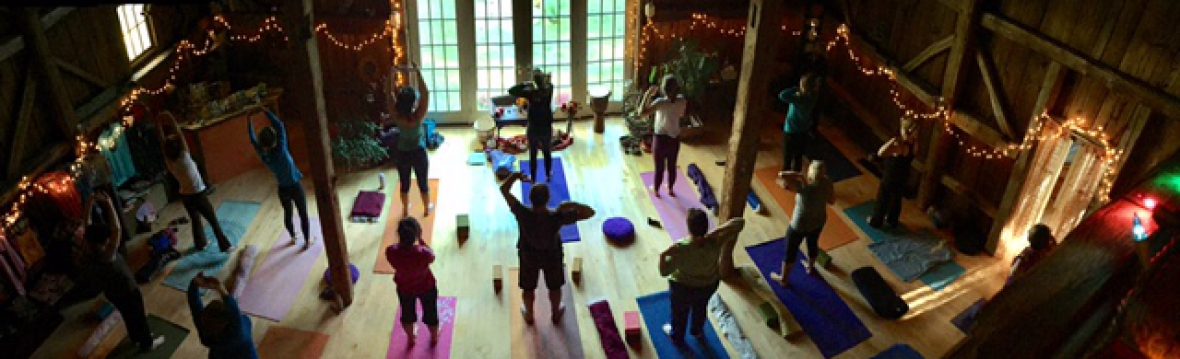
We dress in layers and head to the chilly yoga hall by 6:30, roll out our yoga mats, and practice our pranayama, some warm ups, and then sun salutations as the hall fills with light, and the first heat of the day allows us to peel off a layer. I love teaching here, and our wonderful group loves yoga, so we have fun and are playful, each one of us listening to our own body as we move, breathe, and explore. 

By 7:45 Mahaeshwari, Mahalakshmi, and Indrani are ready to serve us fresh fruits: juicy papaya and ruby pomegranates. We pour cups of ginger and fennel tea, and there is a porcelain bowl of crushed jaggery to sweeten it up just a little if we like. I relish every bite of fruit, and listen to the chorus of happy voices as we eat with pure joy. Some will stay for a breakfast of oatmeal or dosa and chutney or grains of some kind, and others are doing a deeper dietary cleanse and will only have the fruit in the morning. 

The sunrise, yoga, and fruit might make it look like a resort, but I promise you, it is a challenging undertaking not only to commit to this program and to get here, but to be present with all of the things that come up when you experience what we call the “deep dive” into your health. All of us here at the retreat will experience the benefits of Panchakarma therapy (pancha = 5; karma = actions), a powerful and dynamic protocol of Ayurvedic practices to cleanse the body from the inside out to rid the body of toxins (Ama), and then to rebuild and heal the body & mind. The first three prepare and then cleanse the body, and the last two are considered rejuvenative actions:

  1. Snehana (literally means “love”) Abhyanga (warm oils are applied over the body to induce calm and relaxation, generally by a team of two therapists)
  2. Ghee cleansing (internal oiling with medicated ghee to remove toxins from the organs and tissues) for 1-5+ days, followed by
  3. Virechana (purging the body of toxins, generally via the bowels), induced by an herbal decoction
  4. Vasti therapy (oil or ghee enemas), which nourish the colon and surrounding tissues; and finally
  5. Nasya (nasal oiling), which not only softens and nourishes the nasal tissues, but calms the mind and is known to help clarify the third eye.

Many other therapies are used to support these primary ones, including svedhana (or steam baths to promote sweating out toxins during the taking of ghee–see me sitting in the steam box, left), Shirodhara (the pouring of warm oil over the forehead in long, even strokes), or rejuvenating eye treatments, for example (I did those for two years in a row–amazing!). All of these therapies intend to provide rejuvenation and promote longevity by curbing and potentially eradicating (with regular panchakarma) diseases in the body and mind.

One of the things I love so much about this medical practice is that it includes not only curative advice (when we might really need to work on a chronic imbalance or ailment in the body or mind), but also preventative suggestions from the doctor that, together, over time, bring us closer to a state of balance and harmony. 

Abhyanga massage is standard for everyone the first week to help us ground and to soften our tissues for the days ahead when all of us will be taking medicated ghee for 1-5 days, followed by a day-long purgation, before our other treatments and rasayanas begin. Most people have one of these in the morning before lunch

When it’s not our turn for a therapy, there are consults with the doctor, beautiful nature walks, time to read a book on the patio or have a nap. In the early days of the retreat, our mornings are pretty sweet. We settle in together to begin a journey that is hard to put into words, but I’ll keep trying to give you a taste of what it is like to be here. SO much more to share on the treatments we experience–just wait!

For now, the morning is calling, and I’m headed out to watch the sunrise.

With love,

~Katie~